Ask any experienced electrician about the most common cause of sudden industrial motor failure, and "phase loss" or "single phasing" will almost always be mentioned. It's a silent killer — motors keep running (often audibly straining) while internal windings overheat, and by the time the smell of burning insulation is noticed, the damage is usually already done.
What Exactly Is Phase Loss?
Three-phase motors are designed to draw power evenly across all three phases. When one phase is lost — due to a blown fuse, loose connection, or supply-side fault — the motor tries to keep running on the remaining two phases. This forces the remaining windings to draw significantly more current, generating excess heat that degrades winding insulation within minutes.
Why Phase Unbalance Is Just as Dangerous
Even without a complete phase loss, an imbalance in voltage between phases (common in areas with unstable grid supply) causes uneven current draw and heating. Over time, this shortens motor life even if the motor never fully trips or fails outright — it's a slower, less obvious form of the same damage.
- Complete Phase Loss: Immediate, severe overcurrent risk within seconds.
- Phase Unbalance: Gradual insulation degradation over weeks or months.
- Phase Reversal: Motor runs backward, potentially damaging connected mechanical systems.
How Intelligent Protection Prevents This
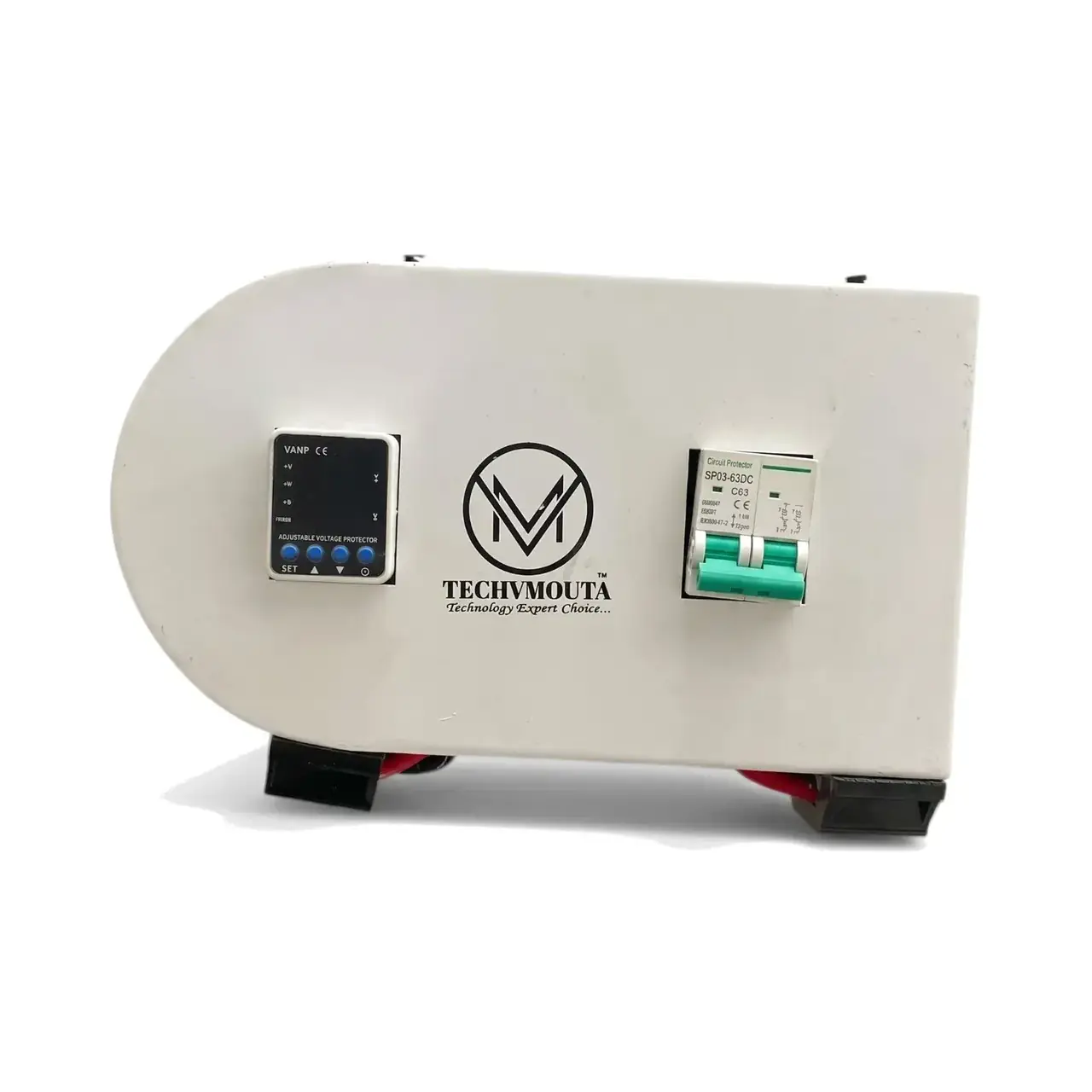
A modern three-phase mainline protector continuously monitors all three phases simultaneously and disconnects the load within milliseconds of detecting loss, severe unbalance, or reversal — well before motor windings reach damaging temperatures. See TechVMouta's Three Phase Mainline Protector range for motors of varying capacity.
Protect Your 3-Phase Motors Today
Don't wait for a burnout. Talk to our team about the right mainline protector for your motor's capacity.
Get a Quote on WhatsApp